LOVE, OUR HOME

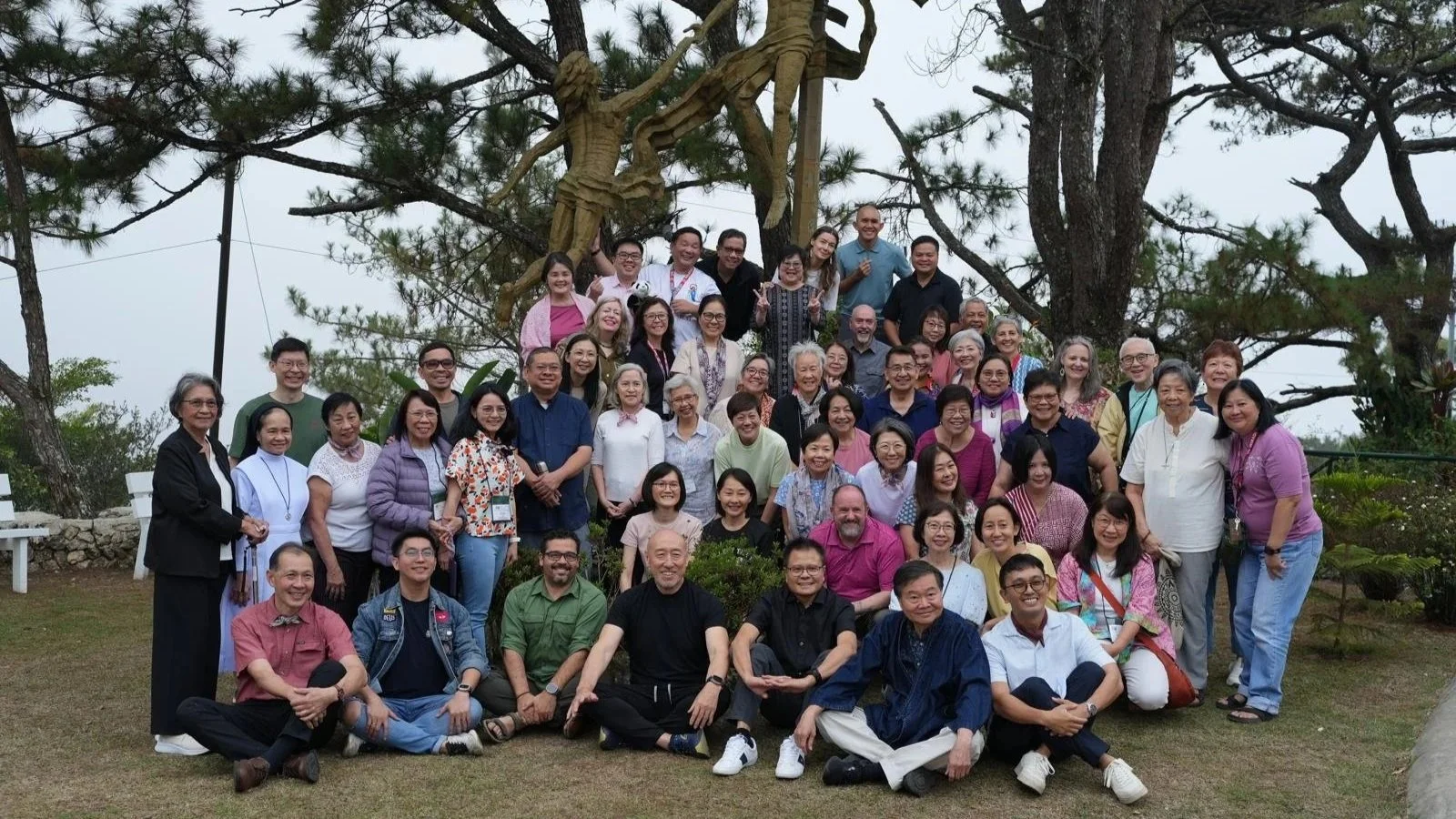
It is Monday morning here, back in a familiar cafe in my neighborhood in Yangpyeong, Korea. The afterglow from the Closing Residency is bright and persistent. One of the constant routines of my life over the last eighteen months has evaporated like a sweet dream, bewildering me. . . For this week’s entry, I decided to share the speech I gave on the last night of the Closing Residency. It was a great honor to represent the cohort alongside Corinne, a classmate.

I thought I would provide a bit of context for some of the imagery and language below. First, the image of the river and the ocean comes from a poem titled Fear by Khalil Gibran, which I highlighted during the theological reflection module. Then the first line of my poem below comes from a game we played during the Opening Residency in December 2024, “Who is your neighbor?” Finally, the word "Opalite" by Taylor Swift has its origin in a surprise dance number that seven of us did, which elevated joy, fun, and celebration to a climactic level. Thank you for journeying with me.

CenterQuest Asia School of Spiritual Direction Cohort 1
Grad Speech

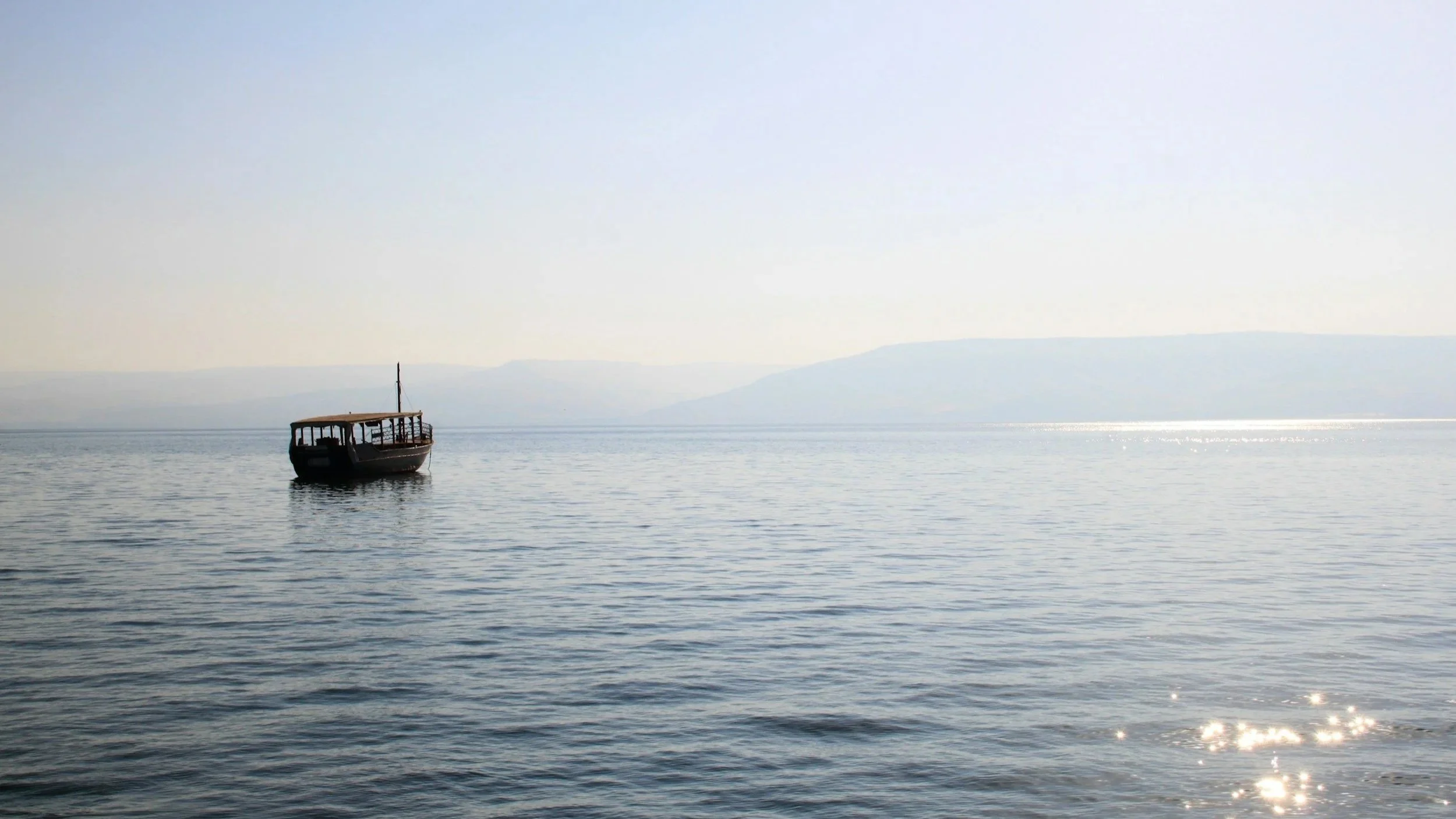
Rivers were us, having traveled through layered forests, enchanted villages, pinnacles, and deep gorges of life. We are about to merge with the ocean, vast, fearful, mysterious, and generous. We are all meant not only to merge but to become the ocean, with all the unique journeys we coursed through intact.

CQ Asia’s commitment to an ecumenical stance provided a safe and generous space, which enabled seeing and embracing my unique journey more deeply and widely. Additionally, its commitment to creating and safeguarding a hospitable communal space allowed all to be known and loved, empowering us to extend such a sacred calling to the world. It is no small thing in today’s context to be who we are meant to be, not who we are supposed to be or even aspire to be. CQ Asia’s communal space, I believe, unleashed a love movement from courage to freedom to service.

And service we do. We exist not only for our life’s sake, but for the sake of the world. The ocean reminds us that we are already in union with God. It is “Christ in me” and “I in Christ.” What we do, then, is not our doing but Christ who lives in us. Ultimately, love is who we are, and love is what we do.

––––––––––––––

Love, Our Home

“I love all men,” shouted a nun, 

chaos erupted, a frenzy of laughter 

unbridled joy took the center stage like 

carefree children at play who know a thing or two about joy ecstasy, 

the opalite sky kind

Children know a thing or two about 

looking and listening,
looking and listening we did

alone, together

with silent pauses and solitary punctuations

We can see because we listen

We can listen because we see

We see and listen as things are, not as we are

That is a good thing, 

for that is how our Father comes to us

the world offers sophisticated seeing and listening

shining shekels, subtleties, seductions, surety

Silent, savvy, spry our Father is

patiently waiting for those who linger, look, listen

Children we were

children we are

who shout we love everything our Father created

including all humanity

chaos will erupt,
a frenzy of laughter will return

so will joy ecstasy

All along, lurking and holding everything together,

Love was the stage, our home.


INTEGRATION

The idea of integration, specifically in the context of spiritual formation, captured my imagination in the last week or so. As I was trying to find words to describe, my reflection is fluid and still being formed. I decided to share my forming thoughts in this post, inviting you to reflect along with me. Drop me a note or two if you want to share your own thoughts.

The life of love is the life of integration. Conversely, the life of integration is the life of love. The life of love means that integration becomes the lens through which we see all and everything in life. As the opposite of fragmentation, integration is concerned with wholeness, as the Latin root word suggests, and is not pitting parts against others. Biases and prejudices are known barriers to integration. More precisely, it is the unknown and unrecognized biases and prejudices that remain detrimental to an integrative outlook in life, as it is impossible not to have biases and prejudices.

Integration is broad and accepting, recognizing everything without waste, even our sins, failures, and imperfections. Perhaps it is better to say that it is because of imperfections that we develop an integrative perspective. Therefore, integration does not mean perfection. Instead, it acknowledges shortcomings, failures, and sins as parts of the whole, while still maintaining the ability to see the entire picture. We begin to realize that everything is connected and interdependent. None of us is entirely good or entirely bad; we are both. A non-dualistic approach leads to greater awareness that God is present in everything and everywhere. In contrast, the world offers a divided, narrow, and controlled view that tends to fragment and shrink things.

Integration is not to be confused with convergence. In short, convergence occurs when our being merges with our doing in the context of needy external realities, creating a dynamic synergy between who we are and what we do. Experiencing convergence is a rare feat in life as it carves out a specific calling and purpose in the world. Convergence is the “coming together” of our internal and external realities, resulting in our unique, fruitful contribution.

Integration allows us to step outside of ourselves since we are a part of the bigger reality and see the bigger picture. In other words, we are far more concerned with the whole, and our integrative outlook may lead to action or perhaps non-action. Our output or productivity no longer defines us. Integration radically bears and connects all as one and whole.

It is not hard to accept that integration involves my whole being, intrapersonal, my unique history of family, cultures, and my decisions and choices. Integration also embraces interpersonal elements in our lives, including family, friends, the many communities we belong to, and even one-off, serendipitous chance encounters. Additionally, there are “interpersonal” dimensions of past mystics and saints with whom we have been conversing and learning from. Integration assumes that we see ourselves with compassion for our sinnerhood and humility for our sainthood. None of us is an island. And yet we all are distinct and unique. Then there is the God element, God’s pursuit of us, just as we are. God is the willing, constant invader of love, wooing us and leading us to love God and love the creation. Our God is the very definition of the perfect Integer.

God has been tirelessly showing each and every one of us that the goal of the integrative perspective is love. God as Love invites us to love God and love everything God created, as best as we can, including ourselves, others, and otherness. This wholistic perspective is both revelatory and revolutionary. And that is how God and God’s Kingdom come to us, perpetually.

Apostle Paul’s commanding words of “love bears all things, believes all things, hopes all things, endures all things” speak of God as Love. God “bears all things, believes all things, hopes all things, endures all things.” As God’s image bearers, the word “all” is the very focus and goal of integration.

GRAND EXAMEN

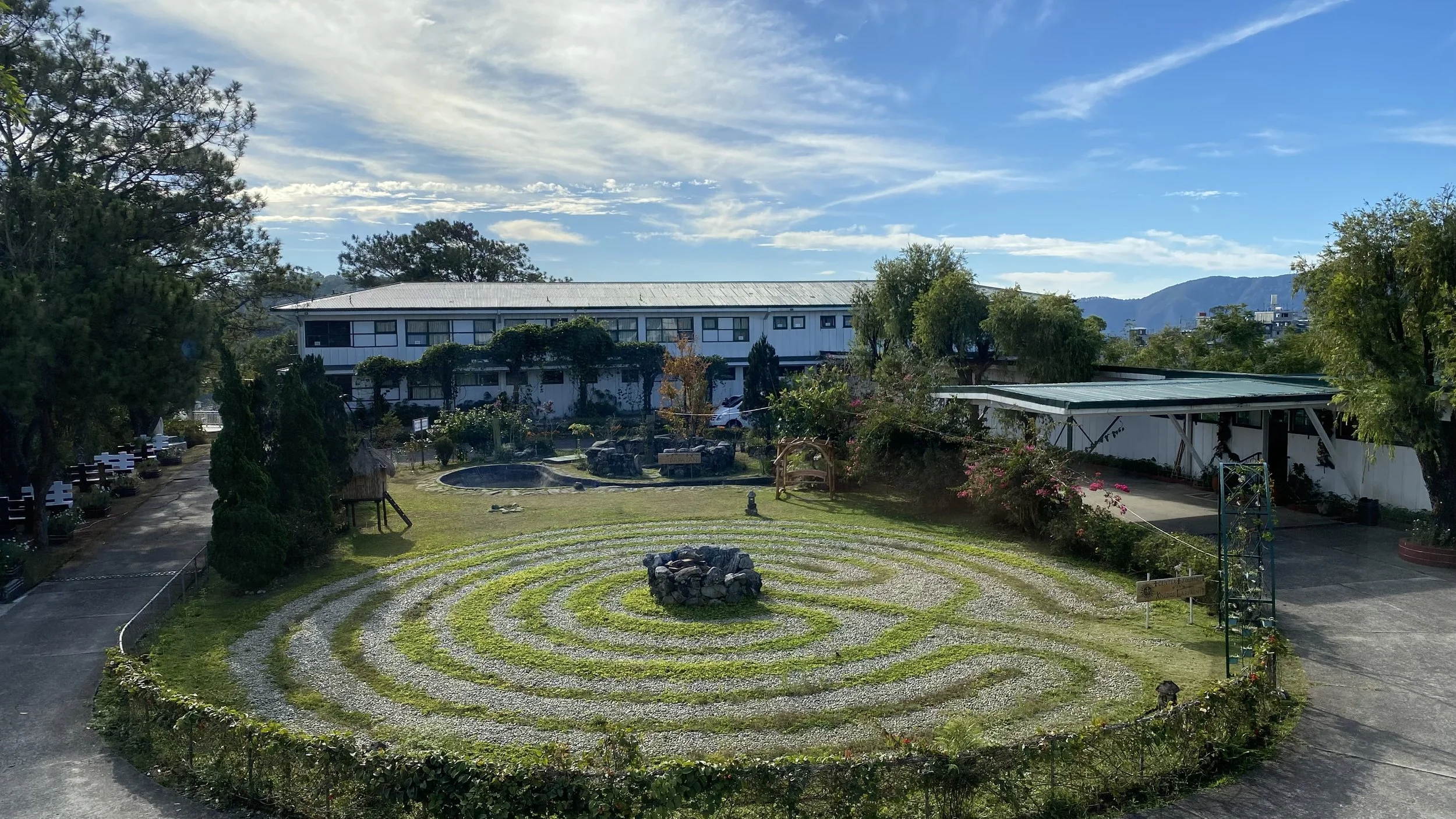
I just finished my final Zoom session at the CenterQuest’s School of Spiritual Direction. What's left is the closing residency in mid-April in Baguio City, Philippines. As part of my last integration essay, I was asked to reflect on the Grand Examen. I thought it would be meaningful to share this reflection with you since I’ve been an open book through my blog entries. 

A LOOKING BACK
Identify 3-4 major highlights, turning points, and landmarks in your journey.

The biggest highlight, the most significant turning point and landmark in the last several months, has been the relocation to Korea last fall from the US. This has been six plus years in the making, after much discernment. There has been an embracing of the new and a letting go of the old. These six years include hitting the wall, rediscovering God as nothing but love, and my true self. I have experienced death, deconstruction, and newfound desire during that span. Certainties and uncertainties coexisted. Fear and excitement, pain and joy were all part of my regular vocabulary. Mystery and miracles were held together.

The other major highlight has been the gift of journeying with my wife together. We have relied on each other more than any other time in the past. Seeking and discerning God happened constantly in union.

We cherish the gift of friendship throughout the US and Asia. God has gifted us and surrounded us with many communities and friends who are journeying similar paths. We are also humbly aware that our recent discerning journey has inspired and encouraged many.

A LOOKING THROUGH
Surface certain common threads that you can pinpoint out of the highlights you identified.

I no longer approach the meaning of life by “doing work or ministry,” but by living my life to the fullest. I desire to extend such perspective and conviction in encouraging and companioning others to be and do the same. My identity is no longer wrapped in what I do or what others think of me (which is a big one for Asians). I view life more generously and expansively. A non-dualistic posture is another way of expressing generosity, compassion, and mystery.

Relationships with God, myself, and others (as well as creation), viewed as one and becoming one, remain paramount. The evolution and transformation of these relationships, as one, are summarized as God as Love claiming and drawing everything to Love. And I want to be part of the divine love undertaking.

A LOOKING FORWARD
Based upon your observed patterns or trends, do a general projection of what you are envisioning for the future.

For years, the image of the river spoke to me. John O’Donohue’s Fluent (below) and “trust the river” and “be the river” became part of my inner mantra.

I would love to live
Like a river flows,
Carried by the surprise
Of its own unfolding

Looking ahead, I sense the invitation from God is to become the ocean. Khalil Gibran’s Fear (see Oct. 14 entry) spoke to me as we transitioned from the US to Korea last fall.

The image of the ocean is vast, generous, daring, fearful, and mysterious. It can be calming and raging, obeying the natural law of creation. The ocean embraces and engulfs all. At the end of the horizon, ocean meets the sky, blurring as one, reminding us that everything is one and will become one. Naturally, my mind goes to equate the ocean with the love of God. Be and do love so others and otherness (as if I could do this) can be and do love themselves, joining and expanding the divine transformational work.

A LOOKING AROUND
Determine accountability and support structures necessary to sustain your spiritual vision for the future

As I mentioned above, we remain grateful to have numerous friends and communities, including our children and spouses, who have been journeying with us. Our souls found courage through companionship and friendship. The beautiful irony is that this journey is deeply solitary and at the same time, deeply communal. The CQ Asia community has been especially life-giving and nourishing to me. It is no small thing to surround myself with like-minded people who are on a similar path, sharing similar values and DNAs. I suspect that my life will somehow be intertwined with CQ Asia moving forward.