PRACTICE RESURRECTION
As a relatively new grandparent, I can’t help but project what the world will be like as my grandchildren grow up. As I look back on my own carefree childhood and untamable teenage years in Korea and the US, I hear an elegiac echo of those earlier years. Not to be overly dramatic, what happened in Nepal and China recently raised an alarm bell, not to overlook the horrific tragedy that enveloped the region. It is an alarm bell that this may be only the beginning of something far greater in havoc and irreversible global consequences. Additionally, with natural and man-caused disasters filling the news daily, I have been feeling disturbed and even a low-grade panic, thinking about the fast-changing world for us, particularly for my children and grandchildren.
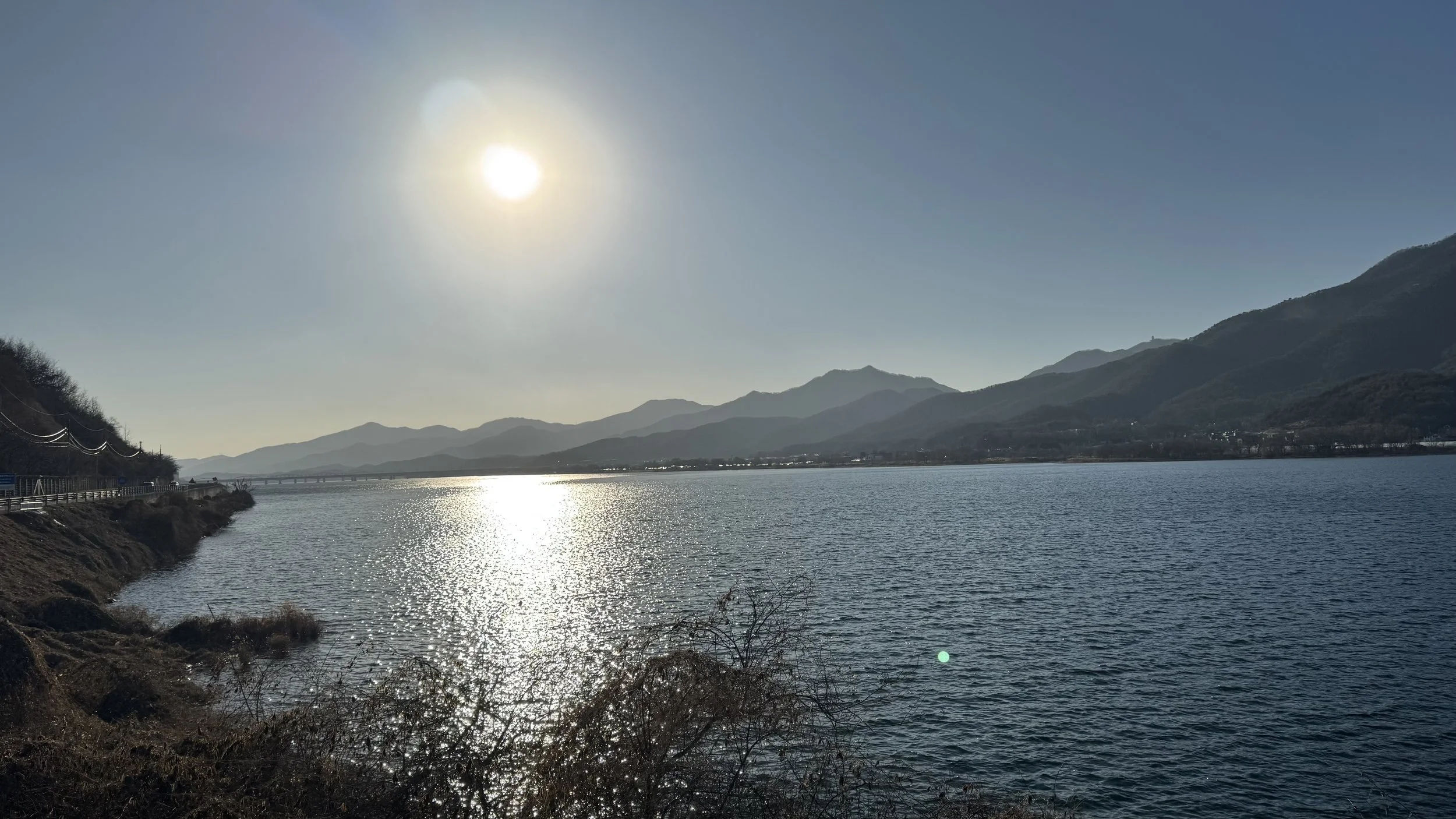
Coincidentally, a week ago, Wendell Berry, poet, novelist, activist, and cultural critic, died. My Facebook feed was flooded with Berry’s writings and the impact he has had. I first read his poem, The Peace of Wild Things, when we came to Yangpyeong a few years back and experienced “the peace of wild things” firsthand. (June 7, 2023 entry) Predictably, this well-loved poem appeared in the feed. I read it again. I mean, I meditated and lingered on it again this week.
The Peace of Wild Things
When despair for the world grows in me
and I wake in the night at the least sound
in fear of what my life and my children’s lives may be,
I go and lie down where the wood drake
rests in his beauty on the water, and the great heron feeds.
I come into the peace of wild things
who do not tax their lives with forethought
of grief. I come into the presence of still water.
And I feel above me the day-blind stars
waiting with their light. For a time
I rest in the grace of the world, and am free.
First, “despair for the world and fear of what my life and my children’s lives may be” summed the state of my disturbed heart. However, from the fourth line, the poem’s tone shifts, and I would like to think Berry drew inspiration from the Matthew 6 passage about the birds and the lilies when he wrote about “the peace of wild things” and “not taxing their lives with forethought of grief.”
Also, there is the present presence of still water, neither in the past nor in the future. Then my favorite line, from which I am drinking deeply today: “the day-blind stars waiting with their light.” Each of us, as stars, is blinded by the greater light and is waiting for our turn to shine. The great irony and invitation is that it has to be dark enough for us as stars to shine. It speaks to me because I, too, have been waiting. I ask myself, “In what darkness do I get to shine?”
The gentle, crescendoed movement from the forethought of grief to grounded presence to waiting is subtle and forceful, as only nature can teach. With all the existential lessons from the wild things, we get to “rest in the grace of the world, and are free.”
Additionally, below is from the last paragraph I wrote on June 7, 2023.
“The wild things” possess the gift and lesson of presence, and they do not tax their lives worrying about what is next. Jesus was so right. It makes my heart so glad and full to know that Jesus was not a “classroom” teacher. The grace-filled divine lessons are all around us if we take the time to pay attention to the natural world. “For a time I rest in the grace of the world, am free” is my confession as well.
----------------
Speaking of Jesus using birds of the air and the lilies of the field to teach, I am also drawn to Jesus’ coming “not to found an organized religion but came instead to found an unorganized one,” according to Berry.
As I have read the Gospels over the years, the belief has grown in me that Christ did not come to found an organized religion but came instead to found an unorganized one. He seems to have come to carry religion out of the temples into the fields and sheep pastures, onto the roadsides and the banks of the rivers, into the houses of sinners and publicans, into the town and the wilderness, toward the membership of all that is here. Well, you can read and see what you think.
From Jayber Crow
The organic and unorganized nature of our faith resides squarely on the person and the mission of Jesus Christ. Jesus came to be among us wherever and whoever we are, loved us as we are, and gave up his life. Forming our human life, both natural and spiritual, offers us unparalleled freedom and responsibility. And the unorganized religion includes nature, nature in all its beauty and savagery, just like humans in their glory and ugly. The unorganized religion is decidedly non-dualistic in posture, holding all and every thing together, and that is how we experience grace and love in the midst of sin and suffering.
---------------
Lastly, this excerpt from Berry!
So, friends, every day do something that won't compute...Give your approval to all you cannot understand...Ask the questions that have no answers. Put your faith in two inches of humus that will build under the trees every thousand years...Laugh. Be joyful though you have considered all the facts....Practice resurrection.
From Manifesto: The Mad Farmer Liberation Front [excerpt]
Our egotistic mind always computes, analyzes, and compares. And an egotistical mind cannot handle questions that have no answers, much less wait for a thousand years. . . Instead, let the urges go, relax, laugh, and be joyful! And “practice resurrection.” This imperative reminds us that we are not of the dead, beyond death. Having known decay and death, and now having embodied resurrection, we can live, love, and laugh freely.