A JOY MUSING
I just finished a six-week online course on Embracing Emotions through CenterQuest’s Lifelong Learning Community. This week’s blog is a further musing on joy.
Grace and I will be in Pasadena, California, from mid-July to mid-August, welcoming our second grandchild and celebrating our first grandchild’s (Jaelen Yunseul) first birthday. We anticipate a lot of family time, including some grandparent duties, which spell joy.
Joy, as “the queen of emotions,” according to Karla McLaren, helps “one feel a blissful sense of open-hearted communion and connection to others, to ideas, or to experiences.” I appreciate the breadth of communion and connection that includes ideas or experiences. Joy is ultimately founded on the Trinitarian community; the uniqueness of my being meets the oneness of everything without losing my existential self. Joy, as a shared emotion, constantly seeks and waits to be one, one with the One or the One in Three and with everything.
Joy arises from both interior-led discipline, without demands, and exterior-led serendipity, without control. I echo Mary Oliver’s first two lines of her poem, Don’t Hesitate, “If you suddenly and unexpectedly feel joy, don’t hesitate. Give in to it.” The invitation is for me to be aware and to embrace the unexpected, the serendipitous, and the passing. I find this increasingly untrammeled and uncomplicated.
I “gave in to joy” through the cool ocean breeze on my face, making me “Aah,” on our most recent trip to the southern coast of Korea; the thought of facilitating Suji Enneagram with various groups; the sumptuous feasts that appeased my eyes and stomach, connecting me to nature’s bounty; special Father’s Day text messages; the happy daily ritual of peeking into our grandson’s world through Google Photos, praying for loved ones who are ill; promoting and interceding for CenterQuest School of Spiritual Direction Cohort 2; (btw, if you are interested in signing up for the program, there is still room as the registration closes by the end of July) and the anticipation of welcoming our second grandchild in less than two weeks.
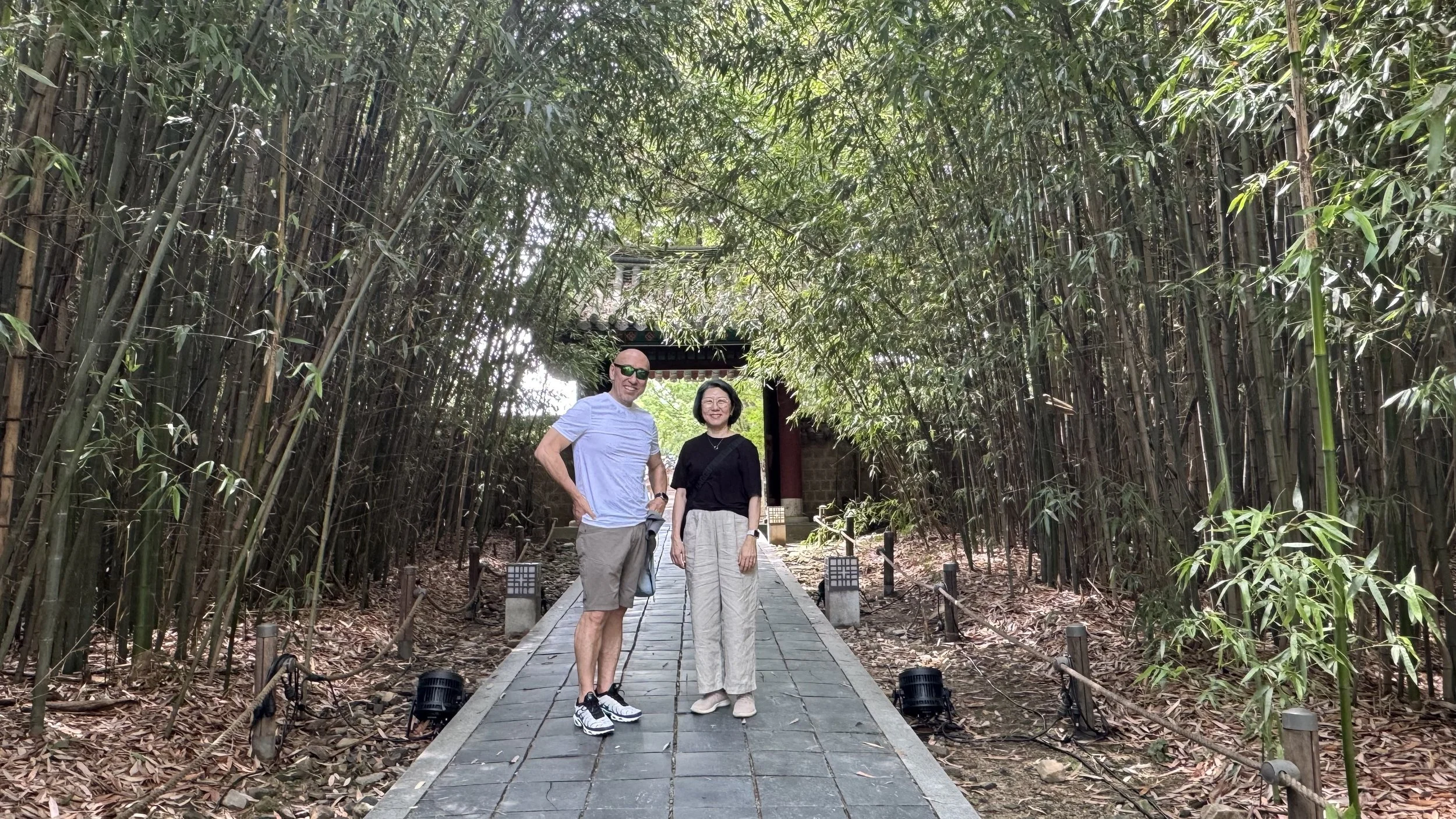
Experiencing spring (fall is gorgeous, but I have come to treasure spring more) in Korea over the years has opened my eyes and my soul to a level of joy of connection and communion I did not know existed. Rainer Maria Rilke pens, “It is spring again. The earth is like a child that knows poems by heart.” Particularly, the morning walks, aided by crisp air, along the farmland by the small river, occasionally spotting elegant, fierce white and grey herons, have been transformative. My love for poetry exploded during this season, as nature became one of the best teachers. No wonder many poets and mystics were avid nature walkers, drawing inspiration and imagination.
Joy is my world colliding with the worlds of others and otherness, painting new horizons and redefining the meaning of my existence. Joy is a “living frontier” that captures “the sheer intoxicating beauty of the world inhabited as an edge between what we previously thought was us and what we thought was other than us.” (David Whyte) Once crossed, what was once a living frontier becomes a living place of “intoxicating beauty.” The gift of beauty can be found in human nature as well as in nature, which is to say everywhere. Joy, then, is the emotion that naturally arises in discovering the connection and communion between the two, it seems.
Joy is a face of communion and love. It cannot be acquired by trying but by giving away, paving the way for graceful reciprocity, as communion invites and insists. Joy is elusive and fleeting, yet it offers a deep, momentary expression of mutuality and love. The impermanence of such joy does not bother me; it invites me to be present and to enjoy the gift of joy as it comes. Joy enters and leaves as it likes, serving as a glorious reminder of whose we are and how to navigate this life with zest, openness, and childlike wonder.