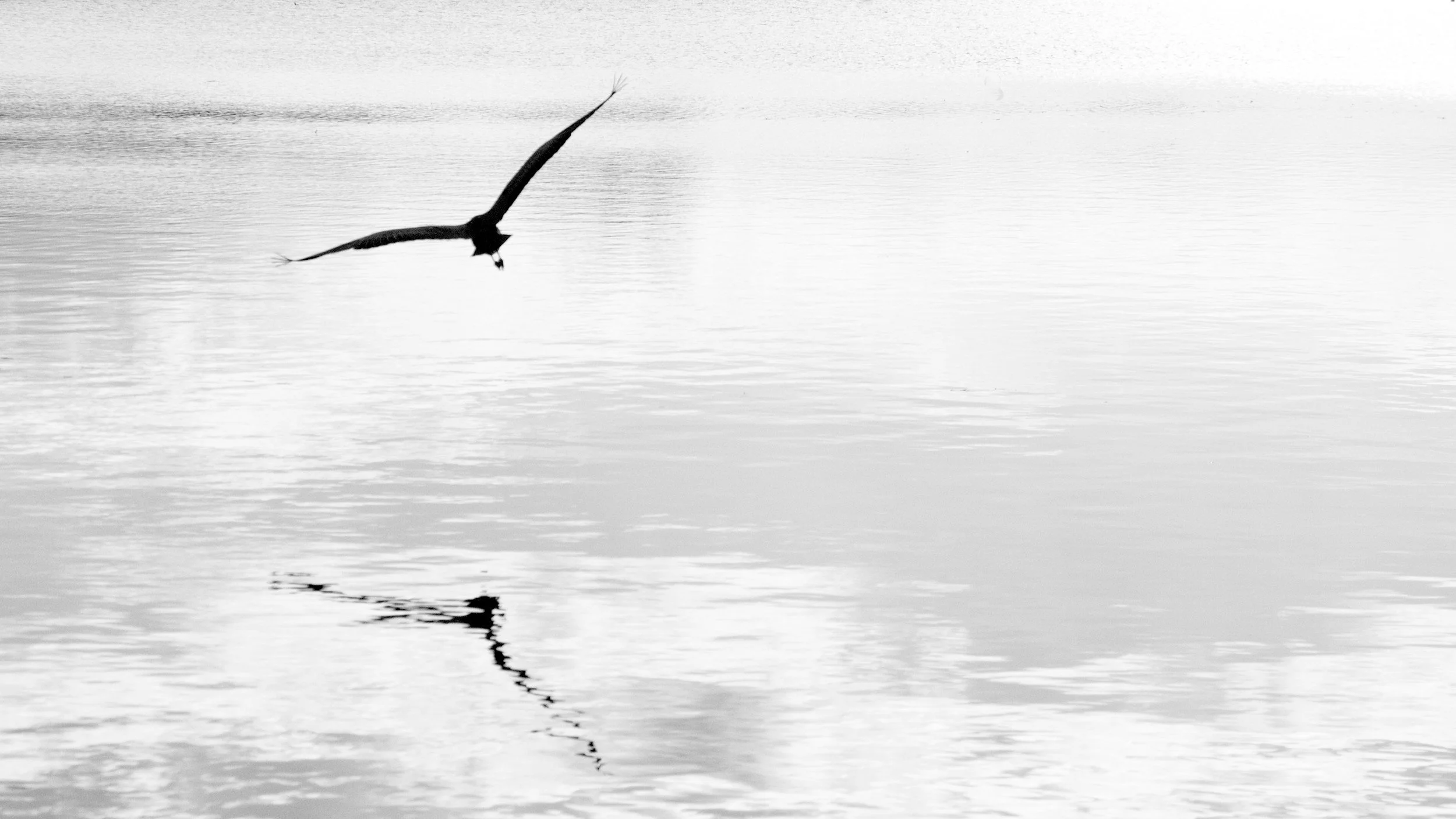
“THE THING WITH FEATHERS”
If one prayer has persisted in my heart in recent years, it has been “Preserve our path, God.” The prayer is futuristic but also present, connecting the past to the present and the future. The prayer embraces both anxiety and hope, as both anticipate future-oriented emotional and heart states.
Anxiety about the future has been weighing me down in recent weeks. While I am so thankful that a seismic question about where our home will be has been solved for the foreseeable future, there are still myriad other smaller but significant unknowns and uncertainties in life. Identifying the sources of the anxiety requires some honest interior work, but at the end of the day, experiencing anxiety is life being life, not the fatalistic kind, but authentic. I have recently been grappling with the wisdom that anxiety is a future-oriented emotion that can be a motivating fuel for embracing changes, problems, and opportunities. It can help me prepare and plan. When channeled right, anxiety can be a gift.
Meanwhile, in the back of my mind, I fleetingly fool myself into thinking that if I have better control over my life, I can reduce certain anxieties or have them gone altogether. I know that is a simpleton mindset, but it is a legitimate temptation to get rid of anxieties by seeking control over my life and what surrounds it, well beyond what I can muster. The other side of my mind tells me to let everything go and asks me rhetorically, “When was the last time you had control over your life, really?” To that, I simply smile sheepishly, for I know the answer. Even when I thought I had control as a leader of organizations, I knew control eluded me over and over again. Whatever the circumstances, thinking that I had control was and remains an illusion.
Then, there is hope. A few days ago, I shared my stream of consciousness similar to what I wrote above, not as coherently, with a group during group spiritual guidance. Among other takeaways, what was offered to me was a vision of hope. Hope was a passing comment, and it grabbed hold of me. Then the next morning, by random chance, the poem Hope by Emily Dickinson found me, which I had read and meditated on before.
“Hope” is the thing with feathers —
That perches in the soul —
And sings the tune without the words —
And never stops — at all —
And sweetest — in the Gale — is heard —
And sore must be the storm —
That could abash the little Bird
That kept so many warm —
I’ve heard it in the chillest land —
And on the strangest Sea —
Yet — never — in Extremity,
It asked a crumb — of me.
Dickinson would not name a specific bird but leaves it to our free imagination. The “hope” bird perches in the soul, the deep center of who we are, and sings a familiar tune our soul recognizes. No exceptions. “Never stops” means it never leaves. What follows is a long run-on sentence punctuated by a series of hyphens. In a sense, Dickinson has so much to say in one breath, yet she takes time to unravel this hope bird by using hyphens, building momentum and inviting us to pause along the way and take it all in.
Then what stands out are a few capitalized words: Gale, Bird, Sea, and Extremity. The four words are personified, beyond mere concepts, making them alive and personal, and “Bird” is pitted against “Gale, Sea, and Extremity.” Hope is available at all times, infinite, and so close that we hear it “sings” to us. The little bird faces Gale, not just a sea, but “the strangest Sea,” and in “Extremity.” There is an evocation that the little bird is too feeble against the powers of Gale, Sea, and Extremity, and stands with no chance against them. Even then, hope is sweetest in the Gale and “kept so many warm” in the “chilliest land” down through the ages, and it “never—asked a crumb—of me.” That is who Hope is and what Hope does, as hope comes as grace, unearned.
Dickinson uses “never” twice, leaving no room for doubt and offering absolute assurance, also resorting to superlatives like “sweetest, chilliest, and strangest.” The one who wrote of telling the truth slant is downright assertive in this poem. There is a sense of personal conviction as she shifts to “I” and “me.” Both uses of the word “never” point to hopeful assurances, empowering readers with hope. Dickinson’s words do not tell me I should have more hope. Rather, they tell me what hope is and does, and leave me room to explore my experience of hope now and in the past. I suppose Dickinson, in the end, is saying the truth slant. And I MUST confess that I, too, have been kept warm by hope.
Today, I treat anxiety as a gale. Anxiety does not negate or cease hope, but precisely in the midst of anxiety now, I can embrace hope by reaching back to my memory bank of hope as I rediscover the familiar tune. Oh, then there is Hope of Easter. “Easter was when Hope in person surprised the whole world by coming forward from the future into the present.” Surprised by Hope, N. T. Wright.
Hope in person, or as a person, changes everything.